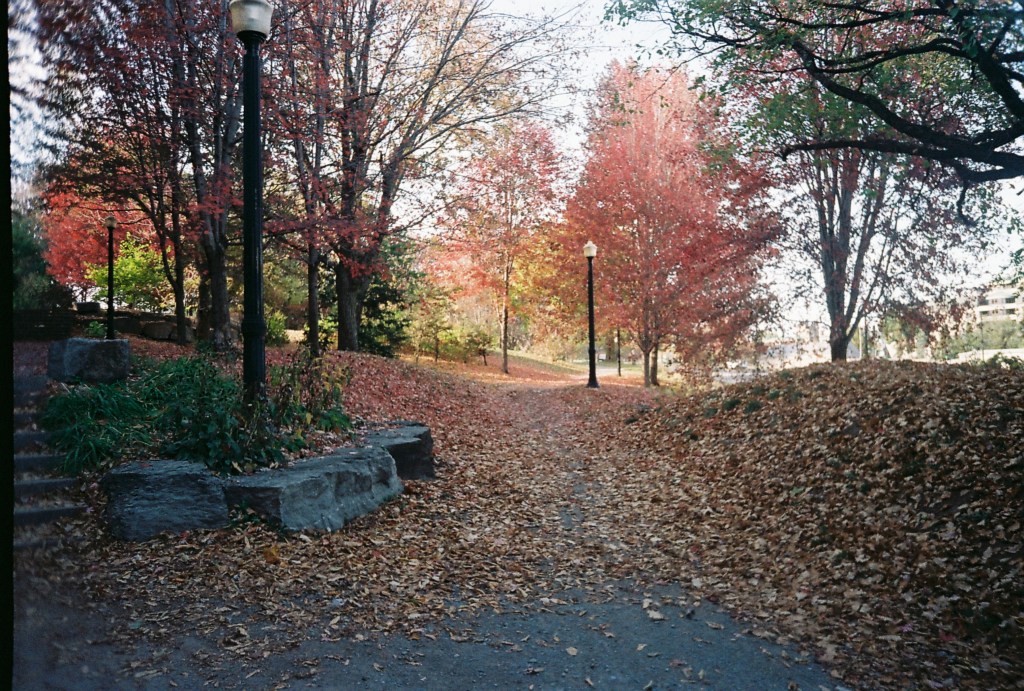
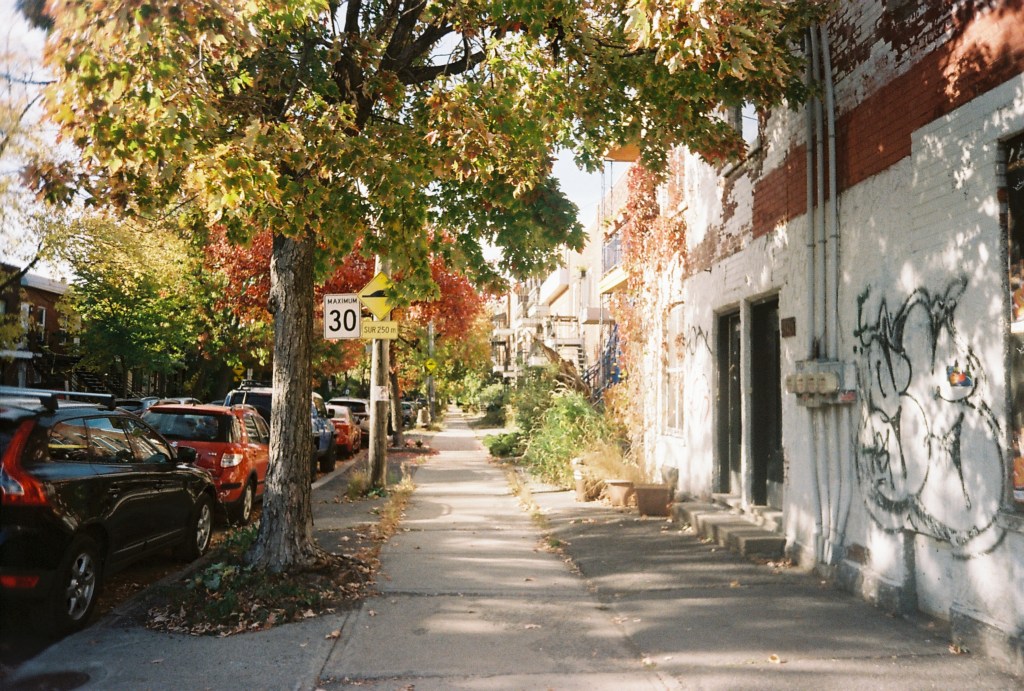
From many fall walks as the leaves began to change
My aunt gifted me this beautiful old SLR that I will soon begin to shoot with so this may be one of the last point and shoot posts for a while. Or maybe I’ll combine photos from both cameras, we’ll see. But anyway, despite the manyyyy light leaks in this roll (which I’ve grown to love) this post also includes some of my favourite photos I’ve taken on my pentax thus far.
Ran Kodak Gold 200 back and I get why it’s so popular now. Enjoy!
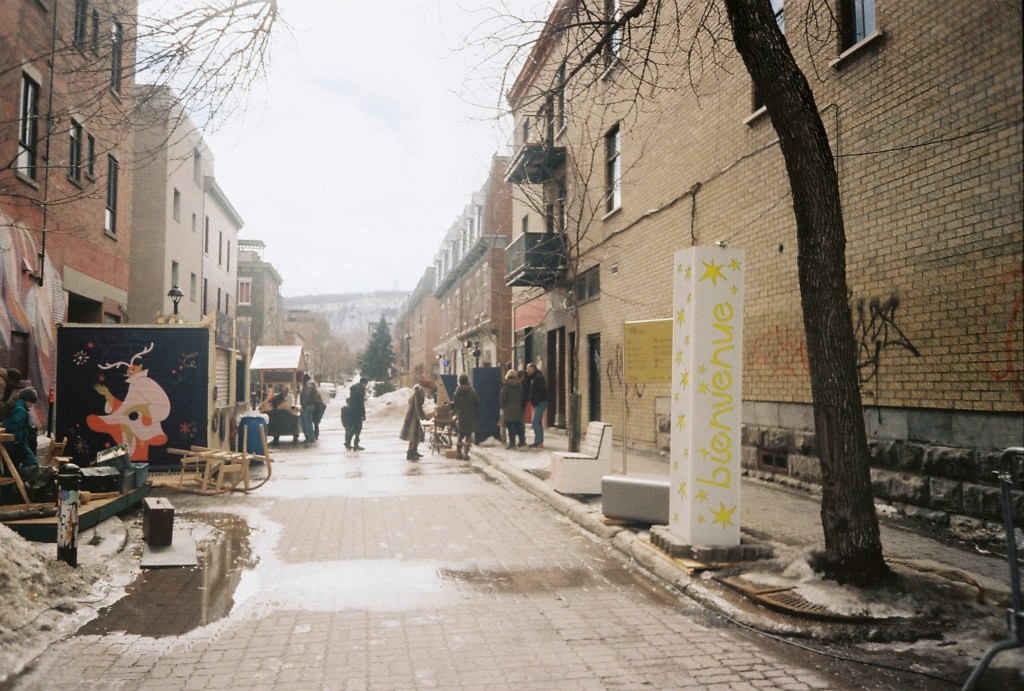
Lots of the photos in this roll were taken on a really long walk in the Mile End. Starting this post off with my favourite one.
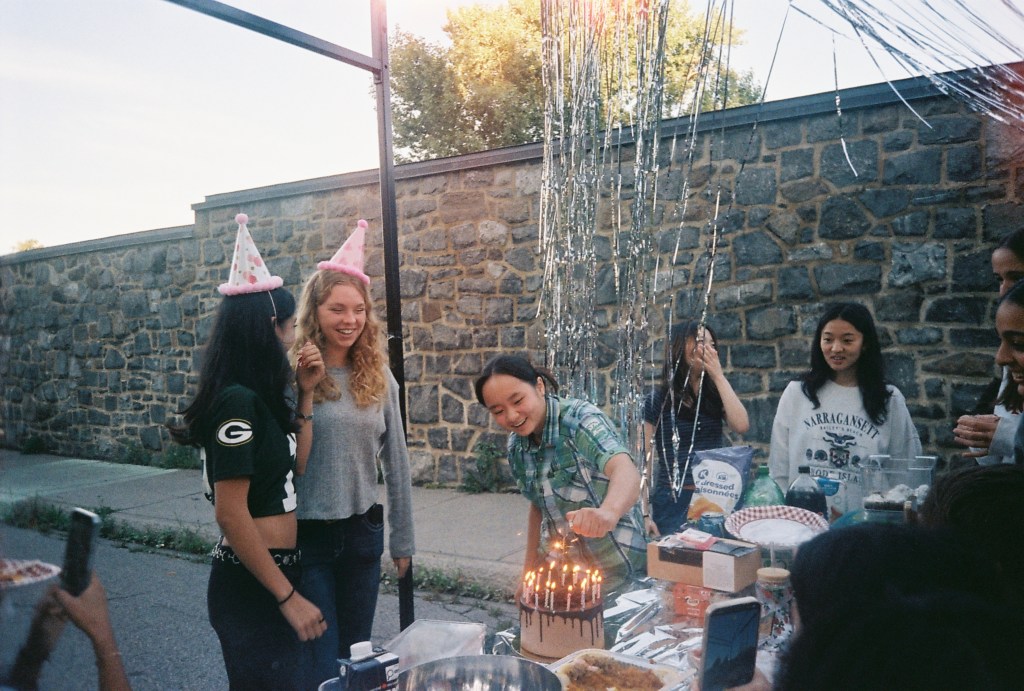
Hopey’s 19th at Parc Jeanne Mance!!
End of summer at Meera’s! My first time meeting her lovely cat, Fresca.
Jeanne Mance again in the final days of fall.
Parc Lafontaine in October! A girl behind me was running up the steps singing “Eye of the Tiger” as I took this. So funny I wish her the best.
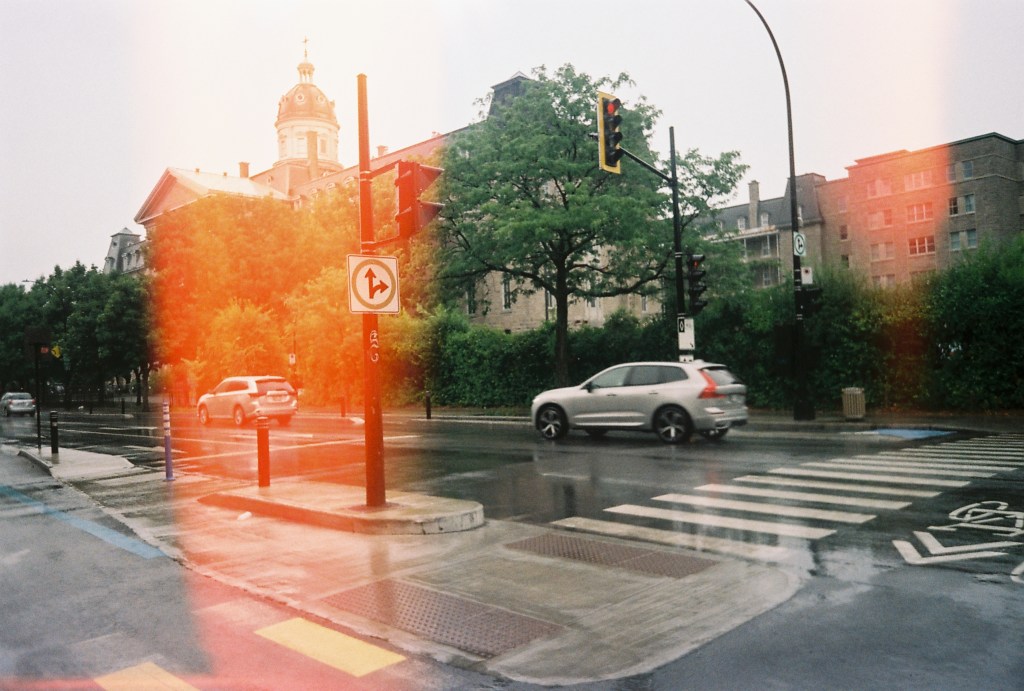
A rainy walk on my way to meet Nina.
Another photo I really love from this Mile End walk. We had just come back from getting smoothies from Jean Talon market here. I’d say I miss the warmth but I’ve actually temporarily escaped the winter cold. I do miss fall though.
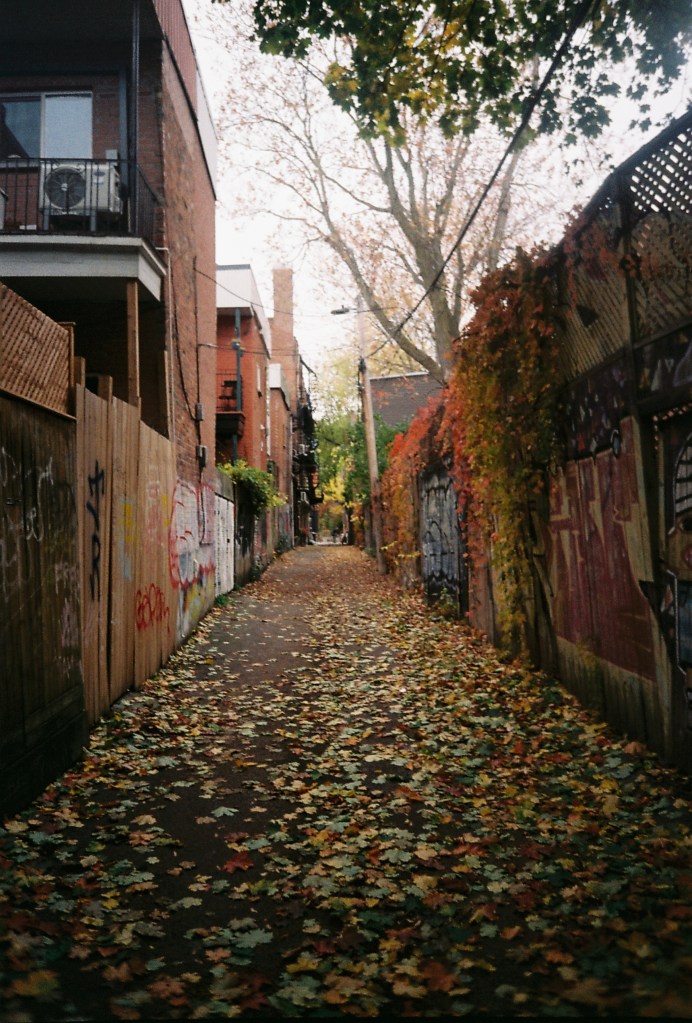
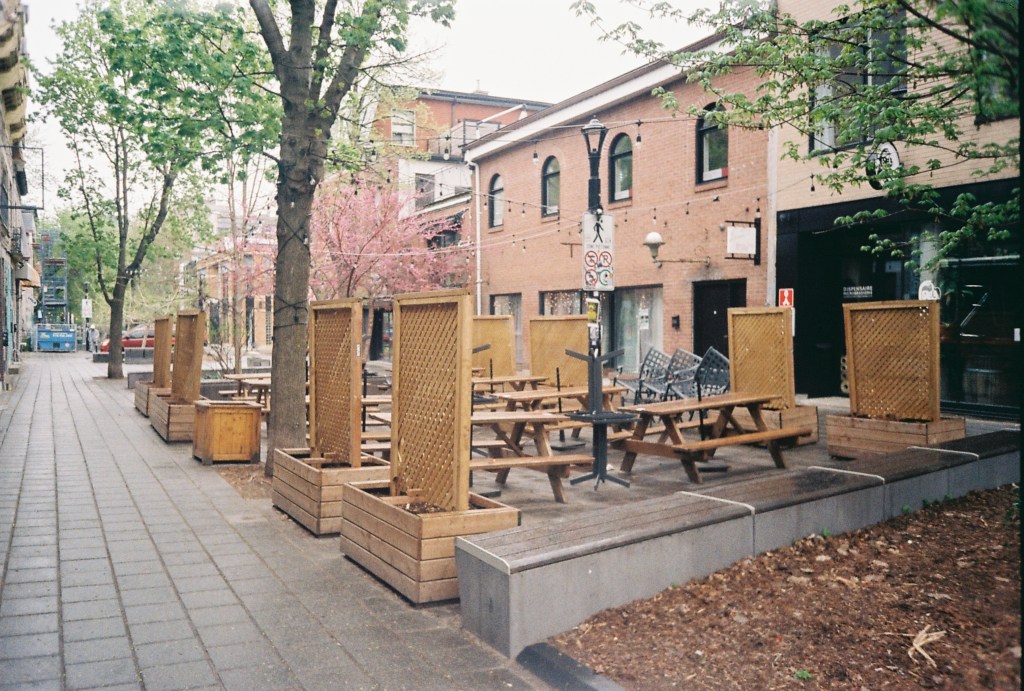
I need to take more portrait photos!!! I know one of these alleys is in the Mile End but I’m not sure which one. I’ve also started to realize how often these captions just include me identifying locations but I don’t mind! It helps me remember days clearer.
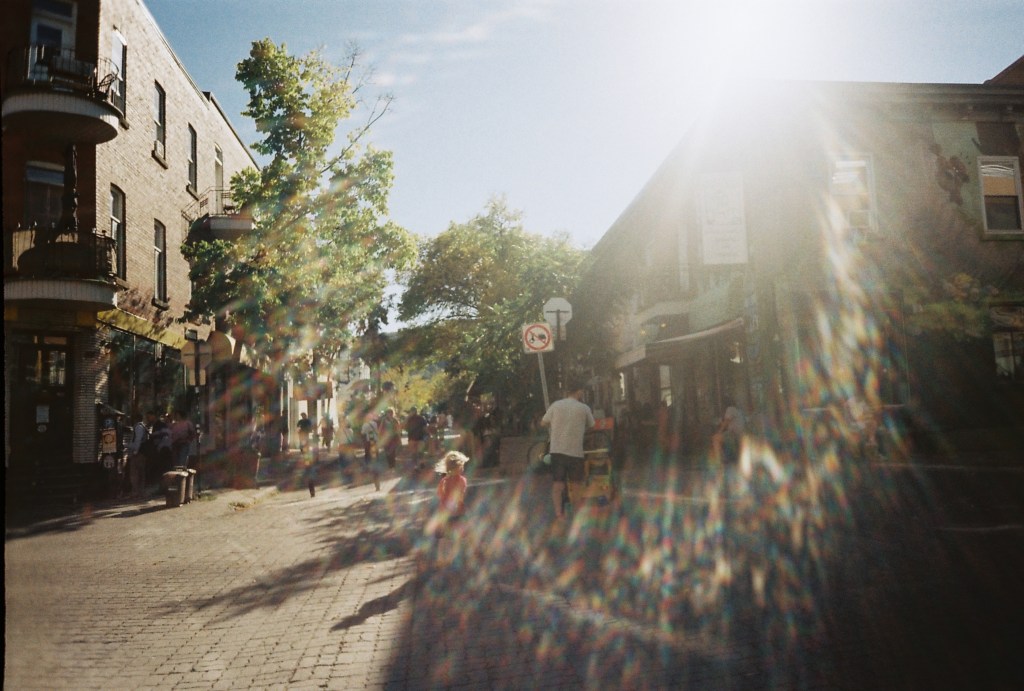
I LOVEEEE the halo effect here. Another pattern I’ve noticed with these posts is that the wonky photos often end up being my favourites.
I always take so many photos of lower campus. I really think this is one of the best views downtown though I never get sick of it ever.
Ending this with a photo of Fatima in Brooklyn this October. Thank you for taking me around ♡ ︎
Photos taken on the same Pentax PC-550. Film is Kodak Gold 200. Thank you Leo for your help with locations :)) Enjoy!
First day east of the island
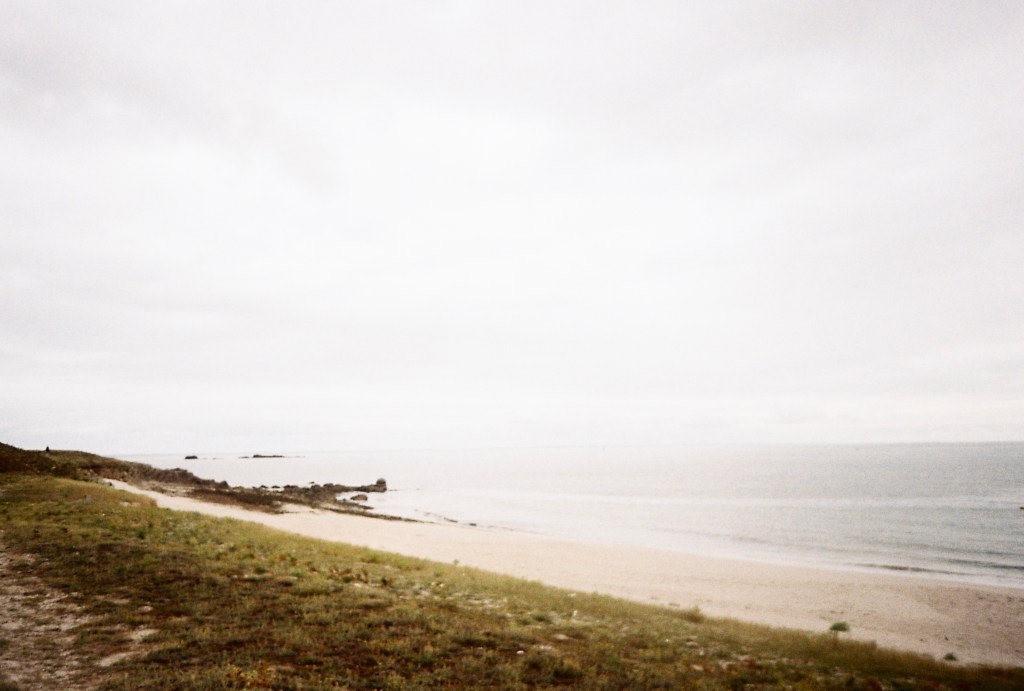
Cloudy walk but the air was so nice and fresh as it had rained earlier in the morning. Leo has just informed me that the two islets in the distance are Grand and Petit Mulon meaning we were east of the island here.
Was never the biggest fan of rocky beaches until this trip.
Probably my favorite photo but I cannot remember what the significance of this painted triangle is :(( I will eventually update this post once I figure it out.
I initially was a little upset with this first day of photos when I got them back. I thought they were a bit lackluster which I wasn’t expecting considering people described Kodak gold 200 as being quite warm. However I quickly grew to really love all these “dull-er” images!! I like how old they look, as if they don’t belong to any time period or as if the area hasn’t seen any human contact.
Photos from Port Blanc
La Croix de Port Blanc
These were taken during our first sunny walk. We arrived at the beginning of a cloudy week but things looked up during the second half! I honestly have no idea what happened to my camera here but I think the photos look very cool so I’m not complaining.
Was a bit worried walking through this area as I don’t react well to dandelion pollen but thankfully, these were not dandelions! I don’t know what kind of flower this is (google is telling me it could be catsear but I’m not certain…)
Port Blanc sunset on the final day.
Walk to Pointe du Vieux Château
Really pretty pathway on the walk to the pointe.
Leo guiding me to his favorite spot on the Island!
Magnificent view.
I love film photography but nothing can capture how beautiful this view was. The sun rays glistening on the surface of the sea made the water look like stars :))
That’s all! Hoëdic was so so lovely I’m very grateful to have been able to visit. This was also my first time shooting true landscapes and I’m really excited to shoot more.
See now I cannot remember what film this is but I do know the ISO is either 100 or 160! Photos taken on my Pentax PC-550 as usual. Enjoy!
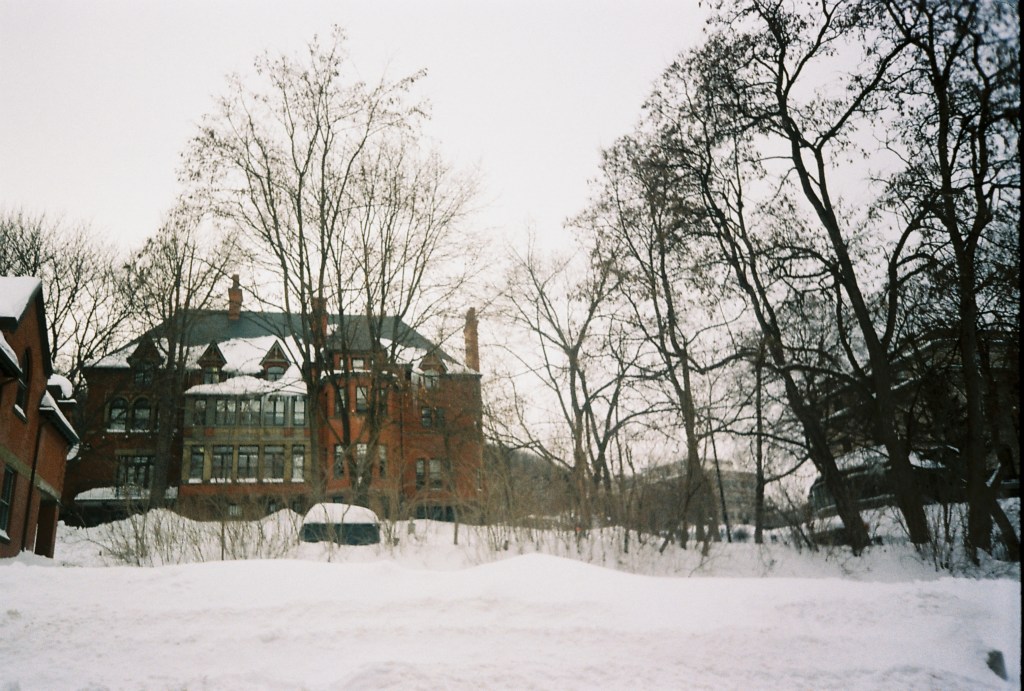
One of the small joys I’d experience from the cold 20 minute walk to my evening econ class was stopping by this beautiful house on Penfield Avenue.
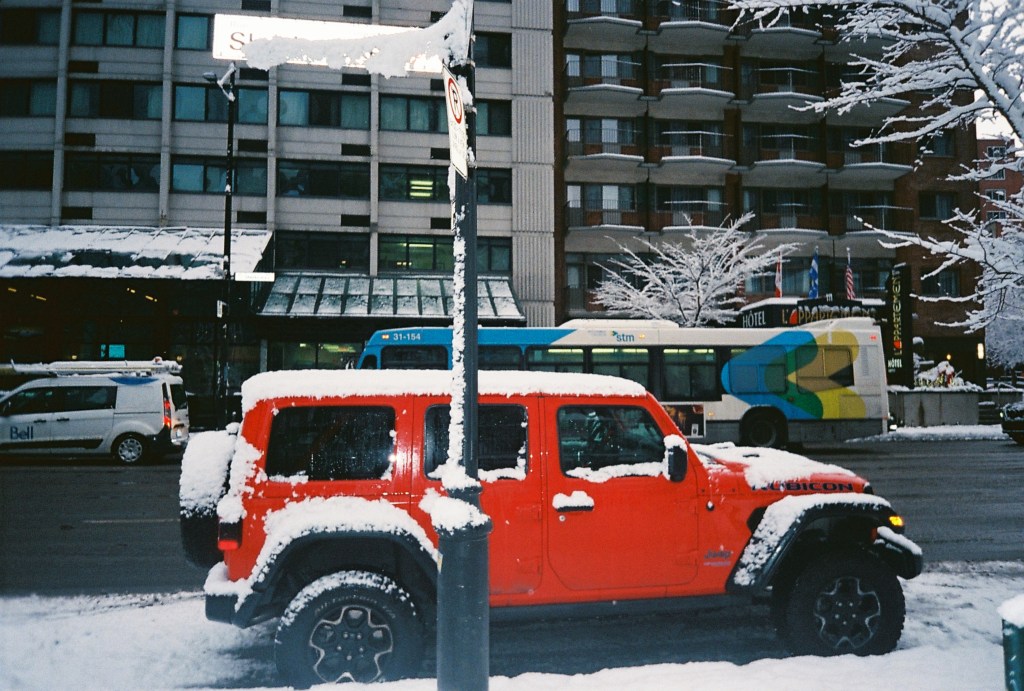
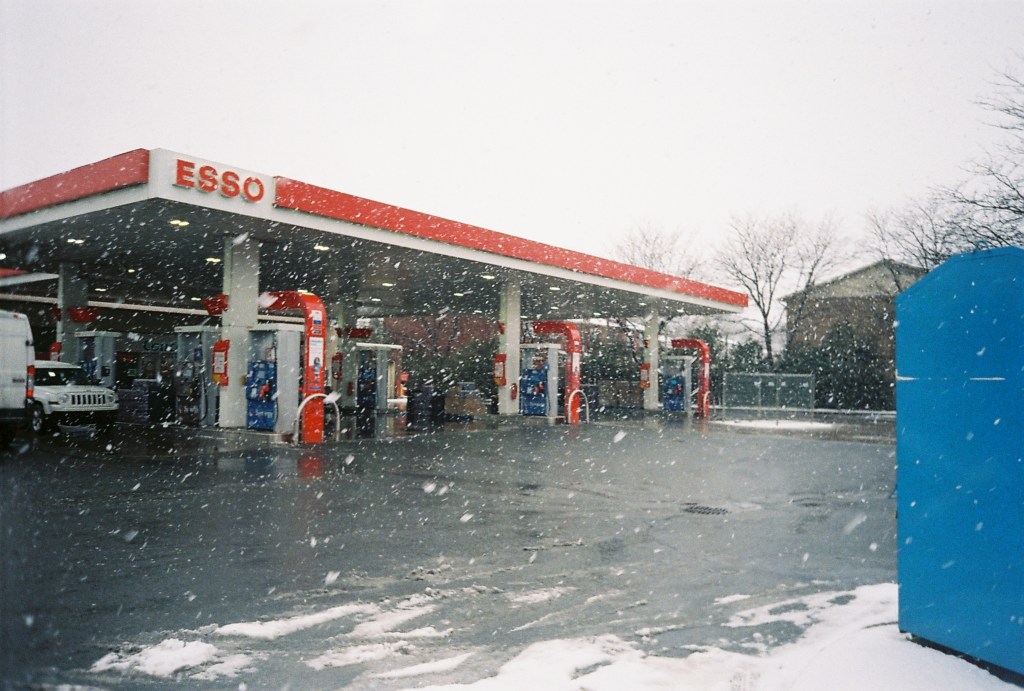
These two were actually taken on kodak ultramax 400 last semester but I still wanted to include them. I believe they were taken on the first heavy snow day in December and I spent sooo much time outside taking photos (many of which I will not include because they’re admittedly a bit ugly.)
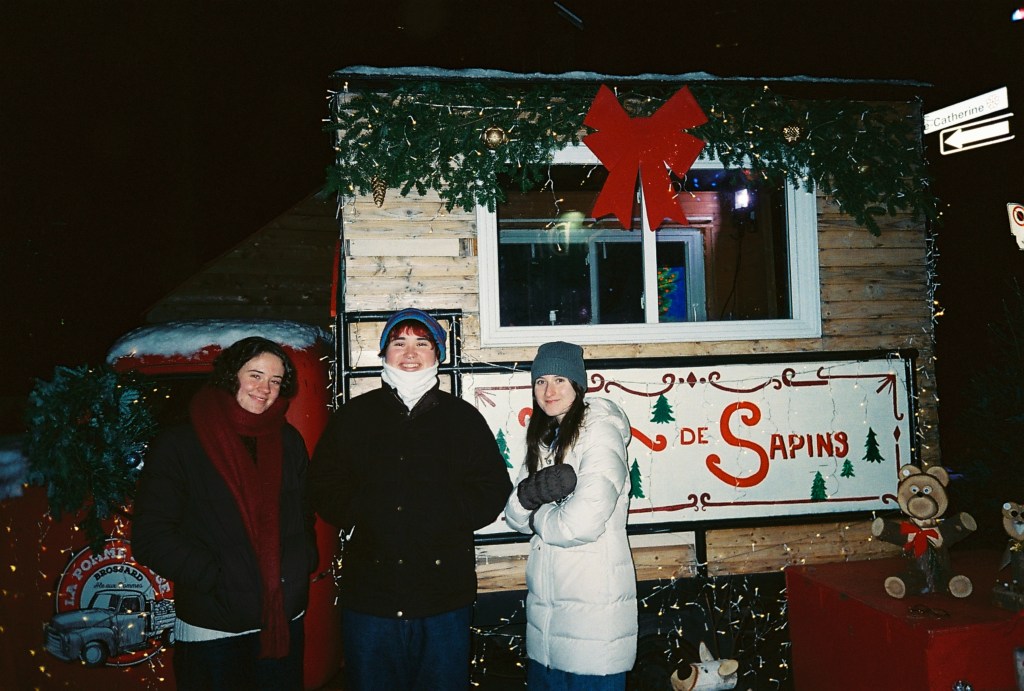
Eavan, Luca, and Monti at the Great Christmas Market! It was sooo cold but we had a great time and watched Interstellar on IMAX (my first viewing) shortly after this photo was taken!
A fun little corner on Duluth when the snow started to melt (only to come back a few days later.)
Another Duluth photo taken on the same day during the same stroll.
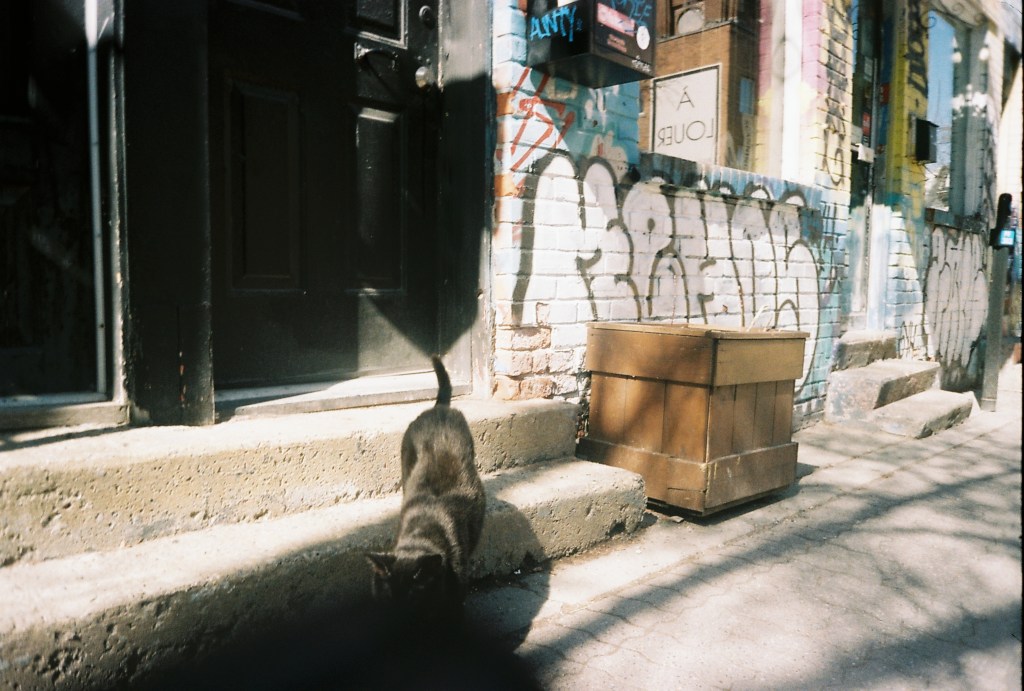
Duluth cat 🙂
More Duluth no surprise.
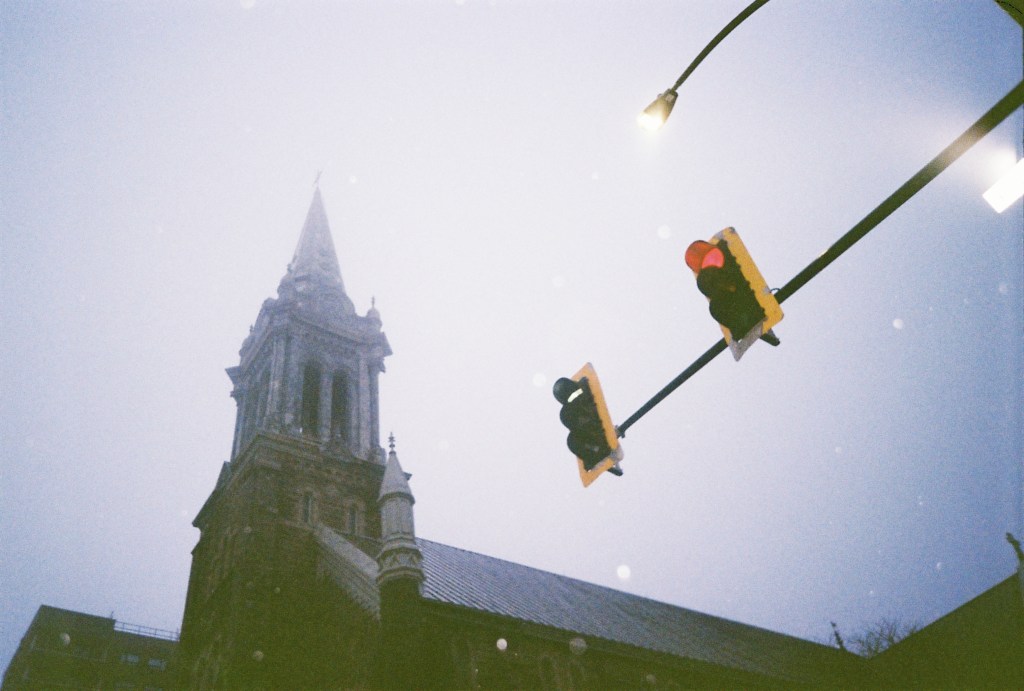
Immaculate Conception Catholic Church on a rainy/slushy day.
Walked by this corner downtown after lunch and had no idea what I was looking at. Googled reverse searched the photo a while later and learned this is the famous British brewer and financier William Dow’s house.
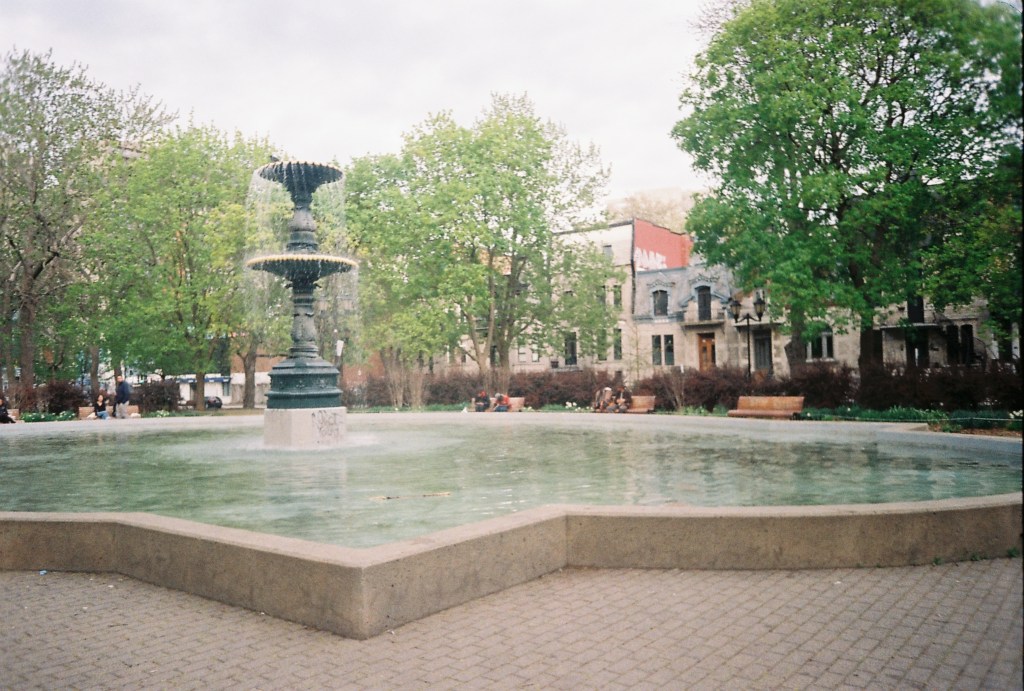
I visited Square Saint-Louis for the first time last month and was taken away by how beautiful it was. So so wonderful I can’t believe it took me so long to visit. Thank you Nora for the suggestion 🙂
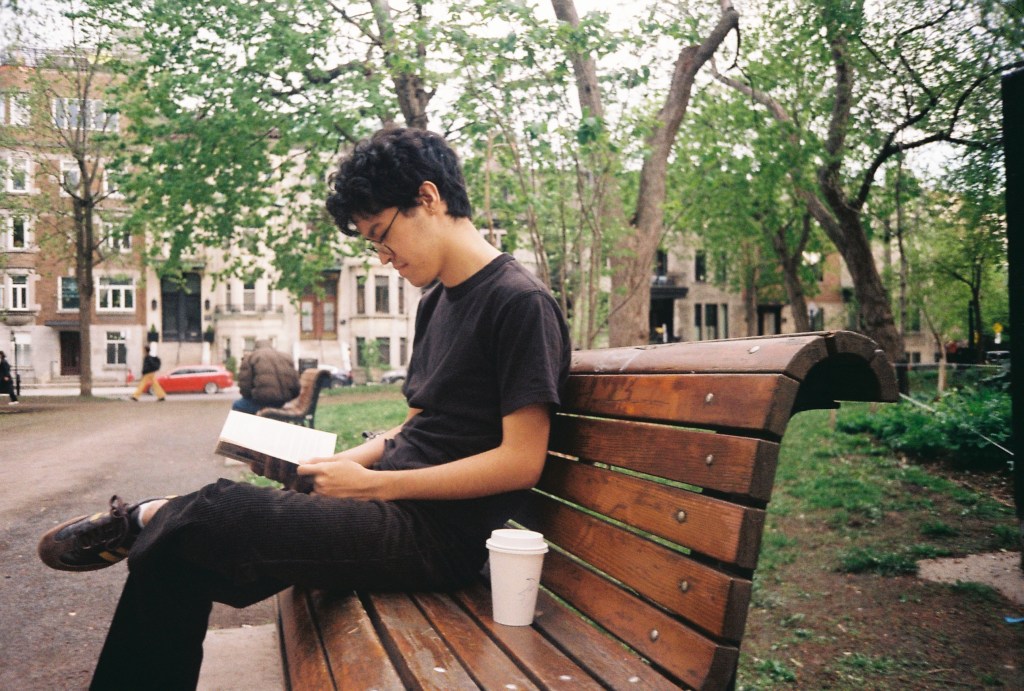
Leo reading A Confederacy of Dunces in Square Saint-Louis.
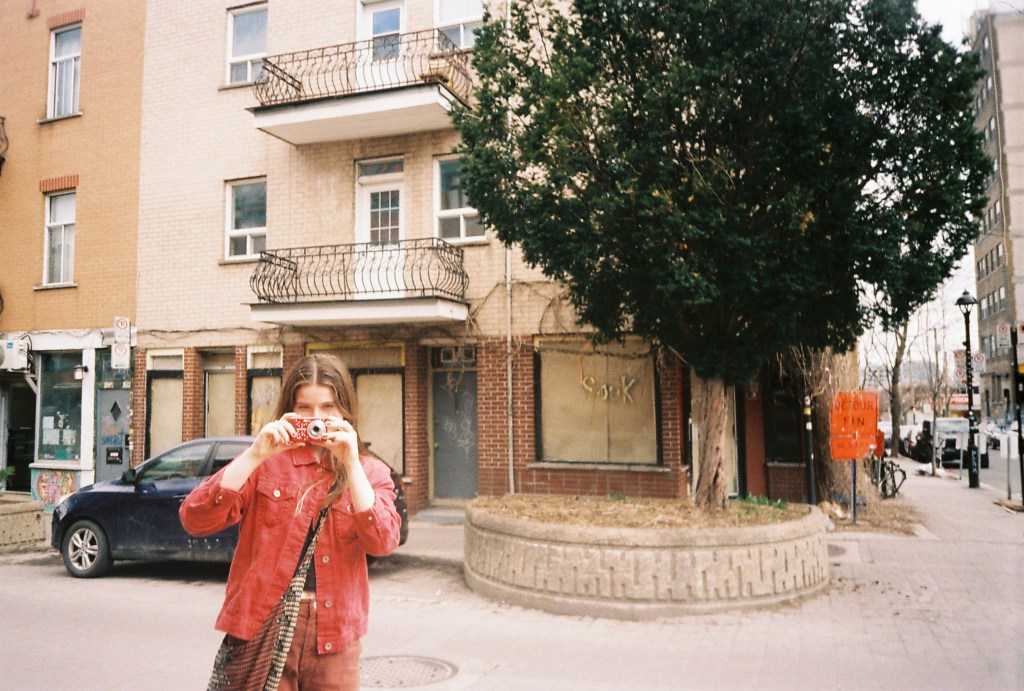
A photo of Monti taking a photo of me (on Duluth again…)
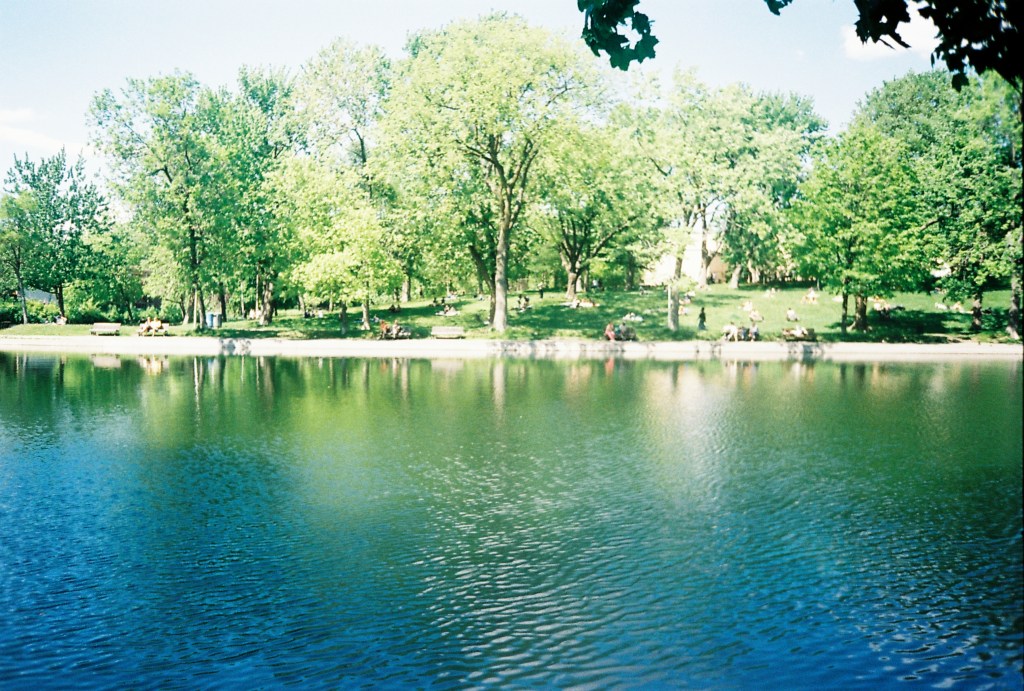
Saw Parc Lafontaine in the spring for the first time last month!
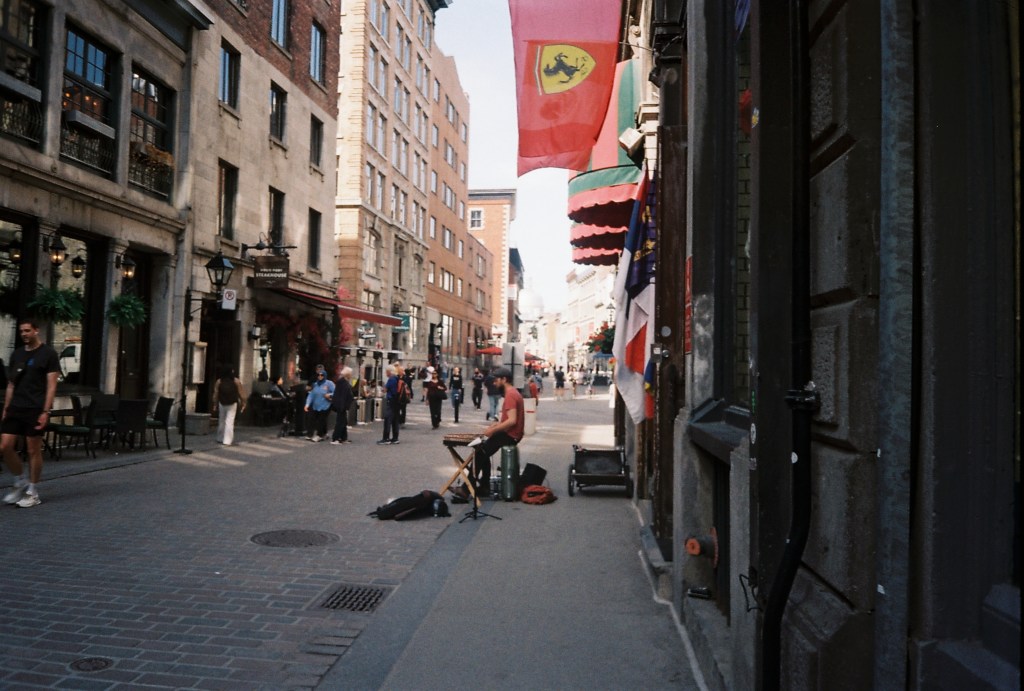
And finally, a photo of a street performer in Old Montréal!
Winter was long, and winter semester felt even longer, but luckily some fun photos came out of it. I’m sad to leave the city now that it’s finally gotten so much nicer, but I really enjoyed the bit of spring I got to experience and am excited to be back soon 😉
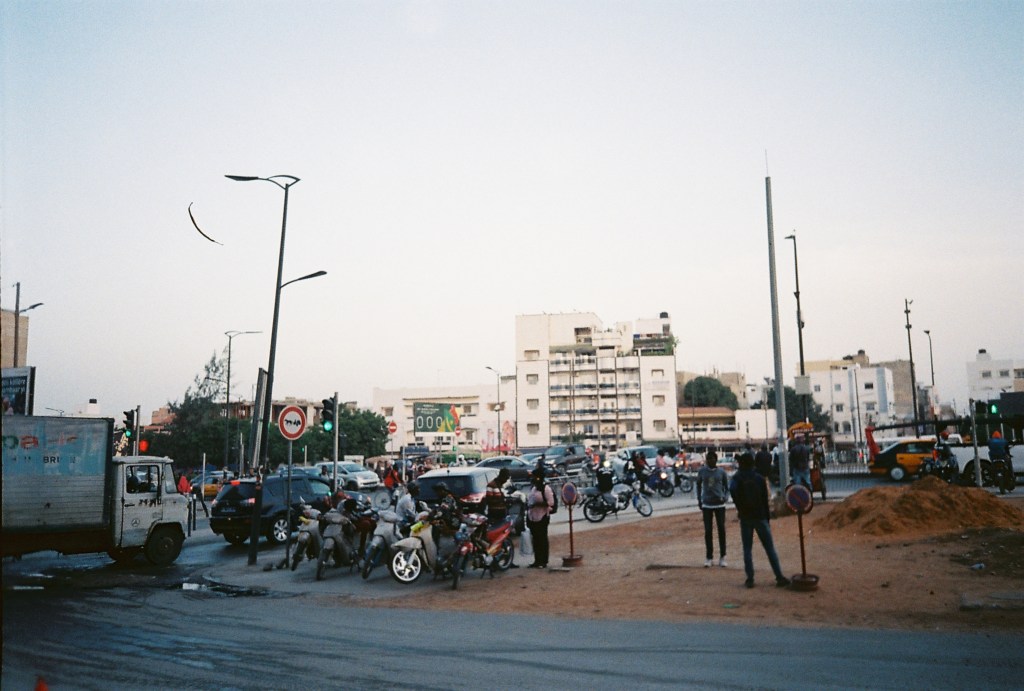
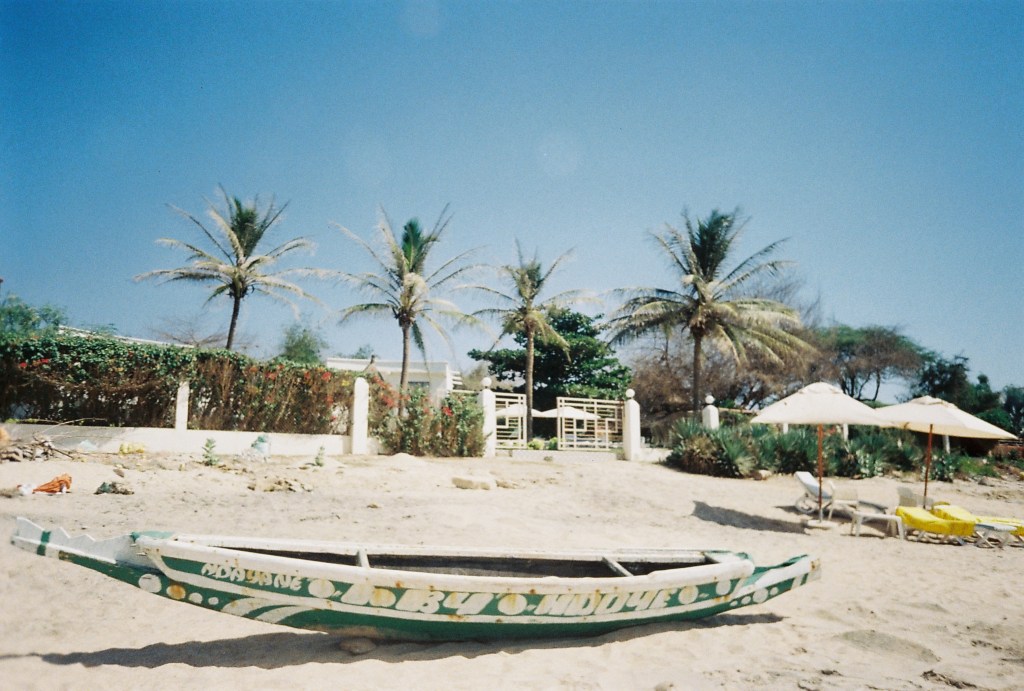
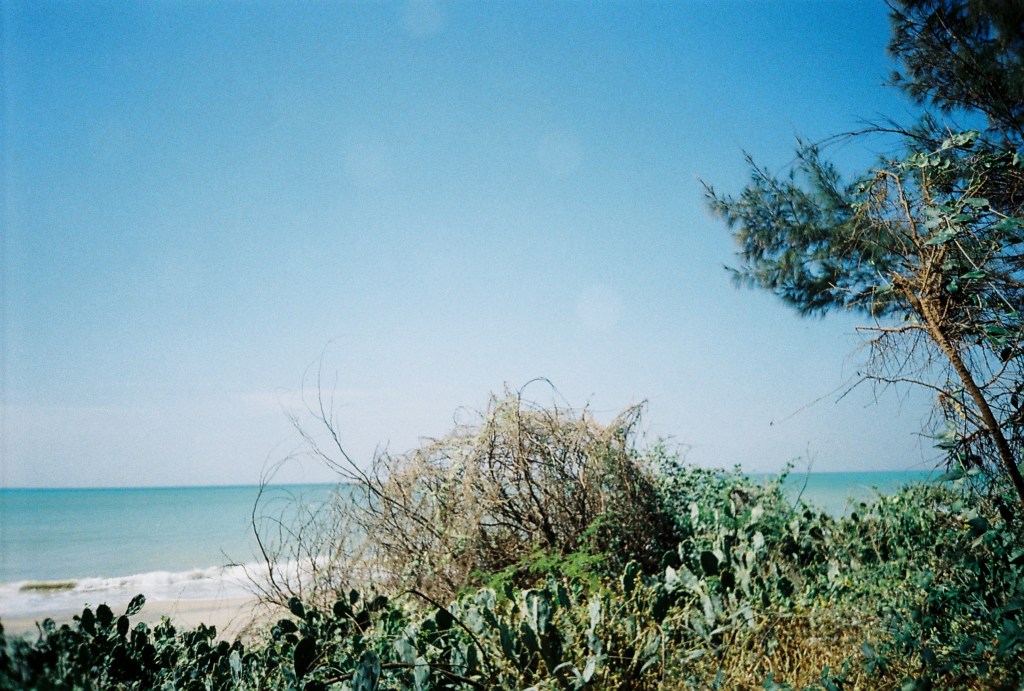
Photos taken on my Pentax pc-550. Film is Kodak Ultramax 400.
My first afternoon in Dakar after two and a half years!
On the way to Chez Loutcha!
I unfortunately can’t remember what beach this is! But the boat reminded me of the ones you see at Assinie in Côte d’ivoire so I wanted to get a photo of it.
Unnamed beach again! The sun made the sand soooo hot this day and my feet were burning while I took this.
Beautiful view from Popenguine.
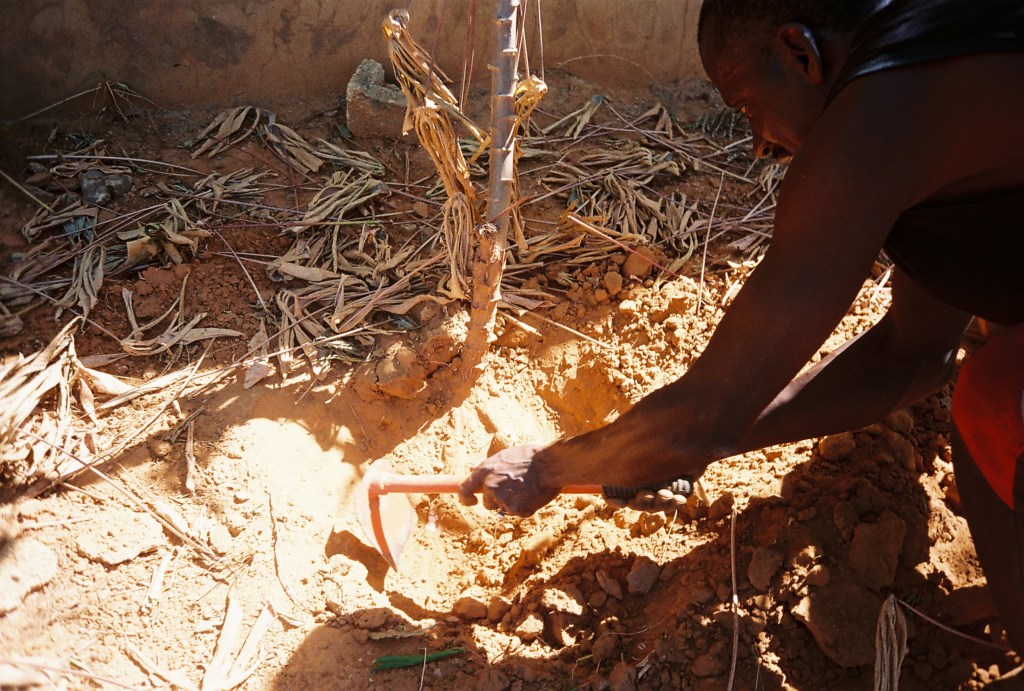
Baba harvesting casava!
I took this photo on my way to Torobee Distribution which is a record store. I was in a bit of a rush and it’s not perfect (as you can see from the light leak or my finger, not exactly sure what it is) but I think it captures how vibrant downtown Dakar is.
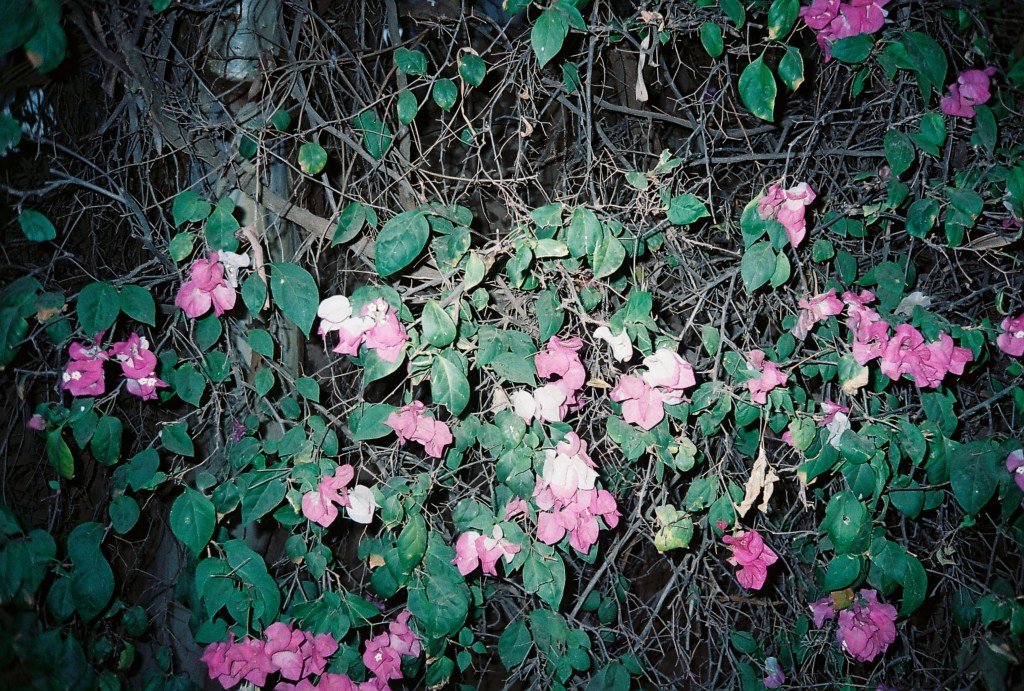
Spooky (ish) photo #1 of my aunt’s garden that I really like!
Spooky (ish) photo #2 of my aunt’s garden that I really like!
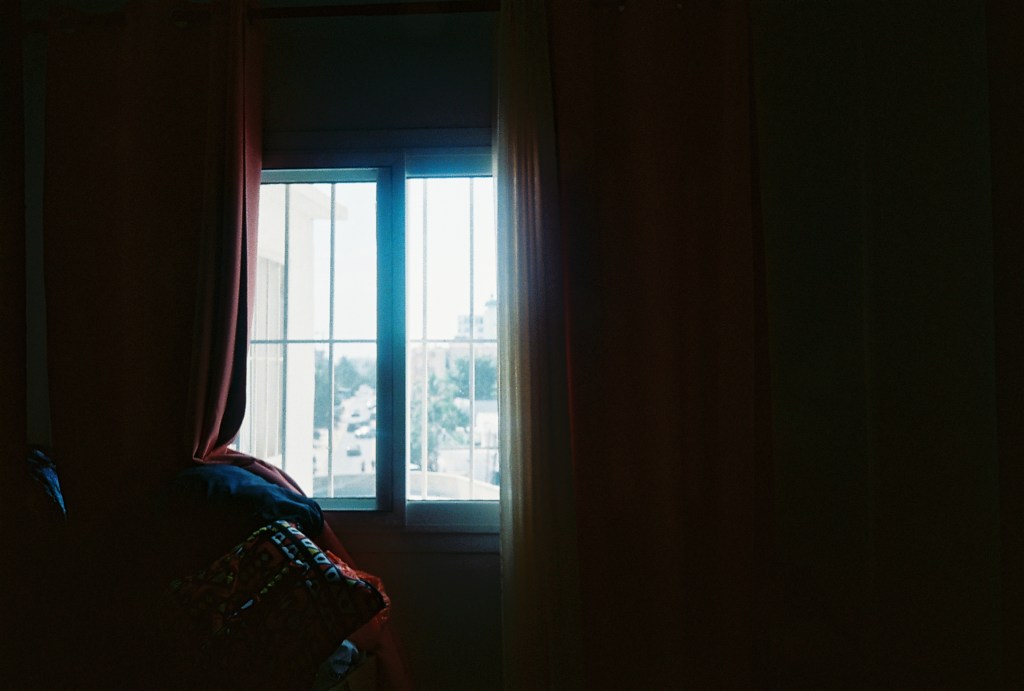
And finally, a very underexposed photo of my bedroom in Dakar! I stay in here whenever I’m in Dakar and I love this room a lot. The light passing through the curtains and the Adhan is what I’m usually woken up by and it’s very peaceful.
Introducing political discourses into my personal life has always been a challenge. I wouldn’t say that I’ve “taken it too far,” but I have definitely tried to live by a guidebook instead of letting my convictions be just one aspect of my decision-making. My difficulty in living naturally but with purpose really is a shame, as I’ve always aspired to be committed to my beliefs but still retain the discrepancies and nuances that make us human.
A few months ago, I watched a roundtable discussion featuring Andrea Dworkin on the After Dark late-night talk show. During the conversation, she briefly discussed the sexism in Shakespeare’s works. She confessed that Shakespeare distressed her. The Taming of the Shrew was a great and terrible play and she hated how it made her laugh. I remember admiring how honest Dworkin was with the contradictions between her tastes and her feminism. Unless our current state of affairs is someone’s utopia, the conflict between the personal and the political are unavoidable. Yet I seldom see anyone point out this obvious truth.
Dworkin’s confession made me reflect on the abundance of contradictions in my own life. For instance, as much as I was always fascinated by romance, it has also always irritated me a bit. I have never been convinced by the dead dogma declaring that romance is a necessity in the fabricated idea of femininity. I was never presented with a logical explanation of why men, women’s supposed polar opposite, would complete women. I’ve learned to move past seeing the polarity in gender, but when I was young(er) and trying to find some sort of truth in false ideas, I had yet to find a satisfactory explanation for the pressing need for romantic companionship. It was like how water diluted juice or how heat melted ice. I understood why opposites could complement each other but nothing in my worldview indicated why this union was an absolute necessity. To clarify, I didn’t think there was anything wrong with heterosexual relationships at all. I wanted one! But I just never got on board with one universal justification for why women needed men. Which is fine. There are many things I didn’t understand growing up and was content with not knowing. But not understanding something and having it pushed on you will inevitably cause you to resent it!
I am now about to reach my two year anniversary with my boyfriend and I love him and I am still critical of heterosexual relationships. I love our relationship. I don’t love parts of the social aspect of our relationship. I love the story of how we got close and I love how much we get along. I don’t love it when I am congratulated for finding a good guy like it’s an achievement that I’ve reached after years of arduous effort. I don’t love the fact that some of my expectations for our relationship are still rooted in expectations that are not my own. But ones that are so socially imposed that it feels unnatural, almost sinful, to go against.
In my world, my convictions and my relationship don’t only co-exist but they also interact with one another. I like to pick apart some of my actions and examine them up close. I try to ask myself whether these means are truly my way of showing love or an unintentional fall into the ready-made roles women are expected to fulfil. I thought I enjoyed acts of service, but I think a part of me just felt the need to do things I thought he wouldn’t or would forget to do. I’d find myself wanting to remind him of things like deadlines or tasks or to simply alleviate him from all the little stresses of everyday life. Of course it makes sense to want to help your partner, but this didn’t stem from the same desire to help my friends and family. The satisfaction I’d receive from certain acts of service didn’t come from the fact that I made someone I love feel appreciated, but instead, from successfully completing a task that was expected of me. It resembled the satisfaction you felt in elementary school after getting your times tables right or memorizing a poem by heart. You strived for the praise that came with receiving a good grade and not your actual accomplishment.
I felt as if there was a third party in our relationship. An ancient mediator only visible to me who was guiding me towards the “natural” way of things. Avoid being too desperate but also be present. Be malleable and understandable. Don’t be too loud and avoid becoming a nuisance to his life. I didn’t believe any of this but I don’t think this mattered. Like I never believed there was a sound explanation for the role women occupied in society, I didn’t believe in squeezing myself into the mold of a “good girlfriend.” Resistance doesn’t require you to have ever actually believed in any of the false ideas you’re being pressured to follow. It requires an acute understanding and rejection of these fabricated ideas in your everyday life.
My distaste for all expectations for my relationship became apparent to me whenever I was in social settings. I was proud of my relationship, but I started to regret informing people about it. I did not want to hear about being an intuitive or sweet girlfriend. I did not want to be told he was good for me. I was intensely aware of the overlap between the ways I show love and the expectations for women. And so naturally, overtime most assumptions about my relationship began to bother me. It would irritate me whenever we were referred to as a duo, when people would ask me about his whereabouts, when people would assume that I was supposed to be able to decipher his actions… None of this was harmful, of course. It’s the reaction you can expect after spending so much time with another person. We were attached at the hip, and it made complete sense that people would treat us as such. But like I said, when the necessity of romantic companionship has been such a defining part of your upbringing, an importance that you’ve never been able to wrap your head around, it’s understandable why you’d be so adamant in ensuring that this narrative isn’t pushed onto you. It didn’t really matter if anyone’s comments were actually attempting to reinforce gender roles or not. I was overtly critical of what the expectations people had about my relationship suggested and nothing could curb my suspicions.
While I know my feminism and my relationship could cooperate instead of coming into conflict with each other, it really did feel as if my work was always counteracted! It was a challenge making sure that I didn’t slip into the misogynistic mold of expectations while also ensuring that my rejection of patriarchal standards didn’t lead me to reject my boyfriend altogether. It felt shameful trying to extract some relevance in my own relationship while belonging to a larger political project. Sexual violence, bride kidnappings, homelessness, and dowry systems are all pressing feminist issues, and I’m writing a think piece on trying to be a good feminist while having a boyfriend!
I don’t think a romantic relationship with a man is necessary for anyone to gain feminist consciousness. It wasn’t for me. But it has made me more aware of the ease in which I can fall into contrived roles. I think it was easier for me to stand on my feminism with no conflict of interest. It’s not as if not being romantically involved with a man automatically absolves you from dealing with misogyny firsthand. That is unavoidable. However it was definitely easier to stand strong and be clear about my convictions without any personal implications.
I hesitated writing this essay because I worried that it would seem like an insult to my relationship. I hesitated even confessing that because I worried that it would seem like a failure in my feminism. Yet, these worries stemmed from how my feminism and my relationship would be perceived by others and not from any real conflict between the two. Like I previously mentioned, my relationship and my feminism are not at odds with one another. I’ve learned to enjoy being challenged. Introducing a political discourse to my relationship has allowed me to ensure that the love I give is the kind of love I want to give and not something that has been predetermined for me. It has given me a deeper compassion for the women who struggle to break free from the mold of societal expectations in fear of social or, more worse, violent retribution.
I thought I was still trying to understand how I can be staunch in my political convictions and still be myself but I think I have that mostly figured out. There will inevitably be an overlap with my actions and gender roles and while I still do want to make an effort to understand them, I can’t dedicate my life to theorizing my decisions when there are more tangible issues at hand. The problem doesn’t lie in a lack of steadfastness but in trying to have others understand how my beliefs work together. I am committed but I don’t want to be dogmatic. I am willing to hear others out but I don’t want to be tolerant. I don’t want to be seen as many things really but I am learning that I cannot control how I will be seen and it’s not actually relevant to my goals. I don’t want to have to convince anyone to like me or to believe in my intentions. I only hope to be as transparent as I can be and have that speak for itself. I’m learning to let go of decorum.
Night Sky with Exit Wounds was Ocean Vuong’s first published poetry collection but the last of his works that I read. If you’ve read Ocean Vuong, you’ll know that he frequently writes from his parents’ perspectives. You’d also know that the name Ocean is a metaphor for his Vietnamese family’s immigration to the United States. He is the symbol of his family’s journey across oceans.
“If we make it to shore, he says, I will name our son after this water. I will learn to love a monster.”
Immigration Haibun, Ocean Vuong
When familiar with this information, dissecting water-related metaphors in this collection becomes gratifying. You begin to understand how lines such as “You move through me like rain heard from another country” in To My Father/To My Future Son could refer to the link current and future generations of his family will have to Vietnam, despite their relocation to the United States.
I did not understand many great quotes or lyrics the very first time I heard them which is probably why I ended up loving them. Taking words and carving at them until the emotions behind an artist’s work reveals itself is a rewarding task. When you step back, you don’t only recognize your attention to detail but you also appreciate the care artist poured into their craft.
I received other great quotes like a punch. I had no time to cut them open and probe them for hidden messages as the exact meaning was immediately apparent. Still, they don’t lack the depth or intellect I’d associate with the art that took me a bit longer to understand. The content of the work being clear doesn’t always mean the artist’s purpose is. And even then, complete transparency and sincerity are just as impressive as creative wordplay.
Take “The Lonesome Death of Hattie Carroll” an acoustic five-minute Bob Dylan song my brother played for me one summer. It explores the story of Hattie Carroll: a black woman, mother, and barmaid who was murdered by a white man in 1963. The song opens up with Bob Dylan’s rough voice as he sings, “William Zanzinger killed poor Hattie Carroll with a cane that he twirled around his diamond ring finger.”These lyrics, like the rest of the song, leave no room for interpretation. There is no need to break the words apart to find concealed messages because there is no need for Dylan to use overly flowery writing. His candidness is a statement in itself. Hattie Carroll was an innocent woman who was violently killed by a privileged man.
“William Zanzinger, who, at 24 years old, owns a tobacco farm of 600 acres
With rich, wealthy parents who provide and protect him.
And high office relations in the politics of Maryland…”
Dylan himself was familiar with the problems that arose from ignoring the societal elements that contextualized the murder and trial. In the song, he repeats, “But you who philosophize, disgrace, and criticize all fears…” to describe the convoluted explanations that ignored the discriminatory basis of the crime. Yet, these excuses are exactly how oppressive systems are given the room to thrive. It would be illogical for anyone to state that Hattie Carroll should receive an ounce of blame for her murder. She was a barmaid who bore the brunt of a violent man’s anger. However, when introducing “intangible” causes related to the crime such as privilege, misogyny, and racism, they hold no bearing. We suddenly can’t know William Zantzinger’s motives when he committed the crime. It would be unfair to say that any racial biases were held by the court Dylan sarcastically states values honor, equality, and justice. Even if Zantzinger was reported shouting racial slurs the night of the crime and even when racial discrimination was not yet unconstitutional, we can’t just presume that a white man receiving a six-month sentence for murdering a black woman was rooted in racism.
Bob Dylan cleverly understood the danger of ignoring the existence of this violent system and he showcased this belief in his music.
Now, complaints about straightforward art are usually aimed at the lack of effort put in by both parties when creating or consuming it. Labelling art as straightforward is insulting to the author as it suggests that they lack the skill to create something with depth. Holding the audience’s hand is considered an insult to their intelligence as it implies that they don’t have the capacity to acknowledge intricacy. The aim of these complaints is to encourage an analytical approach to art. While it can be exhausting to be critical about everything, creating and engaging with art should be done with care and attention. Art reflects the zeitgeist of periods in history and its careful examination allows us to get a glimpse into the era in which it was produced.
Still, we confuse laziness with realism. While the music and lyrics of “The Lonesome Death of Hattie Carroll” are simple, the song is a microcosm of 1960s America. Being frank doesn’t mean the artist lacks creativity or has doubts about their audience’s intelligence. I’m sure if he wanted to, Bob Dylan could have incorporated long and equivocal metaphors in
He could have even gone without directly mentioning Hattie or William’s names in the song and many fans would eventually conclude that the song was about the crime that took place on February 9th, 1963.
But the song as we know it today was meant to hit the audience. Hearing this stripped-down account of the events leading to the end of Hattie Carroll’s life is supposed to hurt. It’s not meant to be philosophized or debated. It would be disrespectful to Hattie and to the many other black women who lost their lives at the hands of an angry man.
So does this mean that to be vulnerable or authentic, facts and feelings must solely be presented as they are? Are pretty words and fluff unnecessary filler?
This depends on the artist’s intent and the effect they are trying to produce. I think there is equally enough room for poetic, explicit, or unorthodox writing styles as there is no scientific method of telling a story.
I do not believe in style as a static phenomenon. I do not believe style is even an ontological truth. I think that we have modes in the same way we have modes of speech when we talk to our mother and different modes of speech when we talk to our friends. All of them are authentic. You’re not any more authentic with your mother than you are with your lover or your friend. You are who you are. And so the question of authenticity is the dubious quest.
And I agree. Authenticity comes in many forms, and deciding that there is one clear-cut way of being sincere would be unreasonable. But I also think we must beware of disingenuous art trying to imitate sincerity. Because oftentimes, art will be presented to an audience without the space for them to examine it any further. When creating art with no room for exploration (whether that be sensual, emotional, or, technical), the end result resembles a preaching rather than a whole piece.
For example, Rupi Kaur is a 21st-century poet whose works cover themes concerning relationships, love, and life. A poem in her “Milk and Honey” collection reads,
“if the hurt comes
so will the happiness.”
-be patient
This short poem suggests that pain will always be overcome and that it is merely temporary, but that’s it. There is no room for more rumination. While one could argue that “The Lonesome Death of Hattie Carroll”produces the same effect, it must be noted that there is a historical foundation to the song that is absent from Kaur’s poem. Dylan forgoes subtlety because the message of his song lies in Hattie’s story and his frankness when delivering it. Dylan’s candor juxtaposes the ways juries, lawyers, and citizens attempted to “philosophize disgrace”.
As previously stated, straightforward art does have its time. Yet Kaur’s poem does not evoke a response from the audience because the poem is a proverb. The content doesn’t allow the reader room to ask questions. Kaur’s purpose is unclear because the words are not her own. The poem discourages both parties from experimenting and examining style and substance.
Like Bob Dylan and many other other artists, Ocean Vuong provides social commentary in his work. Sometimes he is direct and oftentimes he is metaphorical. Yet whether I immediately understand what he is trying to convey or not, I often have to sit with his work after reading it.
I don’t know if many of the artists behind great works prioritize the method or the final effect first. Or if they have no exact procedure at all when creating. But I do think that the style they employ is influenced by the intended result their art will have, whether that choice is deliberate or not. And I believe that to respect their work, it’s always important for an audience to examine it with an open mind and a critical eye.














 Ingara Maidou